Three and Counting... Timeline
A Study of the Repeating 3s Phenomena
| Home Page | Addendum | Page 2 | Page 3 |
| Page 4 | Page 5 | More Threes Examples | AI 3s and 2s |
3s Enthusiasts as of June 6th, 2025
Some of you may want to adjust your own timeline every now and then (as do I), in accord with what you think preceeded a particular occurrence. For those obsessed with the (He, She, or It) "God" theme, I place references to religion and god in the beginning, mainly to get it out of the way for the more lengthy list of non-religious examples— because I think many religious themes express a list of personalized egotisms projected outward by ancient religious leaders like some advertized prize fighter they are supporting because they not only harbor a chip on their shoulder, but are immersed in a culture where combativeness helps to define who they think they are— and later followers added to the (as a standard practice of exploiting the God idea); though in your own timeline history, you might prefer to place it long after other items in your collection because you define it as a purported "science" of religious studies (such as "Scientology"). In any respect, the challenge is not to digress into the strict usage of a Binomial type of categorization (Which has digressed into the usage of three names on some occasions), but develop a "flexibly Trichotomous" template that others may prefer to use.
- 3 qualities of the "god" idea frequently cited:
- God is Omnipresent (everywhere)
- God is Omnipotent (all powerful)
- God is Omniscient (all knowing)
- 3 later additions (due to changing vocabularies) to describe god:
- God is Infinite (similar to Omnipresent)
- God is Immutable (3 in 1 description of previous 3)
- God Is Self-Sufficient (doesn't need anyone or anything?)
- 3 X 3 (9) grouping of other suggested God qualities detailing believer personalizations (typically in a context where potential money or other resource is to be gained):
- God Is Wise
- God Is Faithful
- God is Good
- God is Just
- God is Merciful
- God is Gracious
- God is Loving
- God is Holy
- God is Glorius
- 3 to 1 ratio of God(s)-based religions used to answer human survival questions: (3 into 1 god organization over time):
- Practice of Polythesim (multiple gods, with or without a labeled pantheon).
- Practice of Di/Bi-theism (2 opposing or complimentary gods such as twins, male/female, good/evil, parent/child, duality...).
- Practice of Tritheism (variously labeled as triad, trinity, triune, ternary group, etc... (initially promoted by Jewish leader egotism.)
- 3 Monotheistic (one god) religions born in Desert climates: Christianity, Judaism, Islam (Imagine if all the Middle East had been forest or frost climates.)
| TWO-PATTERNED | THREE-PATTERNED |
Yin and Yang ideology: (e.g.) passive/active, dark/light, etc...
|
I-Ching Triad ideology: (Triads are actually embellished Dyads/Biads) |
Persistent Psychology dualities examples:
|
A few triadic concepts, e.g.:
|
| Two patterned Math ideas: (Duality Is a very pervasive and important concept in (modern) mathematics.)
|
A few 3-part ideas developed:
|
| Binomial Nomenclature (Two-term naming system: Generic/Specific) |
Some instances of 3 names:
|
Binary computer language based on the on/off nature of electricity using zeros and ones (0/1).
|
Trinary/Ternary language for Quantum computers based on the use of zeros, ones, and twos (0/1/2). |
| From Thousandaire to Millionaire to Billionaire status sought for. | Trillionaire status is now sought for. |
| Single and double digit temperatures were the widespread norm. Triple digit temps were the exception(?). | Triple digit temperatures becoming the norm for many people. |
| Double digit gas prices were once the norm. (single digit gas prices (under a dime), have never existed. Note: MS Edge AI describes "single digit" as $1.00 and anything below one dollar as confirmation. |
Triple digit gas/diesel prices have become the new norm. |
The basic two-opening body plan:
|
How a "third orifice" appears (later in Evolution) in mammals:
|
| 2 Lower body Human orifices: Urinary/Reproductive + Anus. | 3 Upper body Human orifices: Ears, Nose, Mouth. |
| Left human body side: 2 heart valves (bicuspid) and 2-lobed lung. | Right human body side: 3 heart valves (tricuspid) and 3-lobed lung. |
| One then two Germ layers: One: Ectoderm... Two: Ectoderm-Endoderm | Three Germ layers appearance: Ectoderm- Mesoderm-Endoderm
|
ADHD symptoms are generally categorized into two main groups:
|
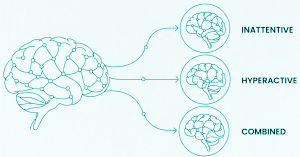 NEW Brain Scan Study Just Split ADHD Into 3 Types: Inattentive, Hyper-active, Combined by Dr. Sasha Hamdani |
Note: I frequently leave a serious comment after watching a video whose content relates to what I am working on. However, I often find that my comments are discarded and not permitted to be included along with the other commentators. Such is the case for the above video. Here are my comments:
- Thank you for the video. Permit me to be brief... Uncovering a "Three types" brain formula is not too surprising for those of us who are interested in the ongoing development of tripartition. But to understand
- ADHD (and other current mental health criteria), it is necessary to note that the standard model of thinking for Psychology is based on a framework called "Persistent Dichotomies": https://www.threesology.org/persistent-dichotomies.php
- In short, Psychology classes use dichotomies and are not cognizant that the human brain/mind is transitioning into a realization of Trichotomy. Because the use of dichotomies is the standard model of analyses, it is expected and thereby frequently projected onto to the diagnosis of an individual... such that the old (current) ADHD is dichotomized into "Inattention versus Hyperactivity and impulsivity." By abandoning the old stricture of duality (not using standard tests) like the investigators did, they were enabled to perceive the existence of a three-patterned criteria as shown in this video. The fact that the investigators set aside the currency of typical testing methodology, tells us they are experiencing an unrecognized trend beyond the standard cognitive orientation involving dualities.
- Current Psychology standards based on an over-riding usage of dualities, can create circumstances of misdiagnosis and aggravate problems particularly for those who brain/mind are transitioning into an accommodation for a trichotomous perspective... leading to a usage of chemical restraints because a patient's thoughts do not exhibit the characteristically required perceptions of duality, even when no one customarily itemizes them. Patients are being forced to toe the line in accepting a worldview of dichotomization which resembles the worldview that Psychology students were taught to absorb as THE reality of their profession, without ever getting any instruction about a developmental trend in the brain/mind towards trichotomization, whether the patient is aware of their developmental trend being experienced or not.
- We have a serious problem when those who are to determine a person's sanity/insanity, wellness/illness, etc. are expecting a patient to conform to the world the Psychologist/Psychiatrist was schooled in, when they are transitioning into a different worldview reality. Conflicts will necessarily continue.
- 3 common themes to the End Of Time reference in multiple cultures:
- Destruction and Renewal – the end is a precursor to rebirth.
- Moral Judgment – the righteous are saved, the wicked punished.
- Cyclical Time – many cultures see the end as part of a repeating cosmic cycle.
- Norse Mythology – Ragnarök: In Norse tradition, Ragnarök ("Fate of the Gods") foretells a cataclysmic battle between gods and giants, triggered by events like the breaking of Fenrir and the release of the Midgard Serpent. It ends with the death of major gods, the destruction of the world, and a promise of rebirth.
- Mayan Civilization – The Long Count Calendar: The Maya saw time as cyclical, with the current era ending in 2012 according to their Long Count calendar. This "end" was not destruction but a transition to a new cycle, symbolizing renewal.
- Hinduism – Kali Yuga and Kalki: Hindu cosmology divides time into four Yugas, with the current age, Kali Yuga, marked by moral decline. The Kalki Purana describes Vishnu's avatar Kalki destroying evil and restoring order.
- Zoroastrianism – Frashokereti: This Persian belief holds that the world will end in Frashokereti, the "Renewal," when the forces of light triumph over darkness, leading to a perfected state.
- Aztec Mythology – The Fifth Sun: The Aztecs believed in a series of "suns," with the current one (the Fifth) destined to end in destruction, followed by a new creation.
- Judeo-Christian Tradition – The Book of Revelation: Christian eschatology, especially in the New Testament’s Revelation, describes the final judgment, Christ’s return, and the creation of a new heaven and earth.
- Sumerian Myth – Order vs. Chaos: Sumerian cosmology envisions a final cosmic battle where chaos (Tiamat) threatens order (Marduk), with destruction and possible renewal tied to humanity’s moral alignment with the gods.
- Ancient Egypt – Zep Tepi and Ma'at: Egyptian belief in Zep Tepi (the First Time) and the weighing of the heart against Ma’at (truth and balance) reflects a moral end-time judgment, with renewal for the just.
- 3 shapes to the Universe: Flat (closed), Spherical (Euclidean), Saddle-shaped (Hyperbolic).
- 3 Origin-of-the-Universe Models: (previously noted in ancient times as a two-patterned ideology such as Yin/Yang)
- Big Bang Model- The Big Bang Model is the leading scientific explanation for the universe’s origin.
- Steady State Hypothesis- The Steady State Hypothesis was a major alternative in the mid?20th century. It held that the universe has no beginning or end and looks the same at all times and places (Perfect Cosmological Principle).
- Inflationary Universe Model- The Inflationary Universe model refines the Big Bang by adding a brief period of exponential expansion a fraction of a second after the start.
- 3 Major types of Galaxies: Elliptical, Irregular, Spiral.
- 3 Historical Moon origin theories: Fisson, Capture, Co-(binary) accretion.
- 3 spatial dimensions: Height, Width, Length. (adding "Time" creates a 3 to 1 ratio)
- 3 "dimensions" on a checkers and chess board: Horizontal- Diagonal- Vertical
- 3 common categories for arranging elements of the Periodic table: (This classification matches the standard understanding of the periodic table divisions used in chemistry education. Other
subgroups, such as alkali metals, alkaline earth metals, halogens, and noble gases, are more specific but still fall under these three primary categories.) [MS Edge AI]
- Metals
- These are located on the left and center of the periodic table.
- Metals are generally good conductors of heat and electricity, malleable, ductile, and tend to lose electrons to form positive ions (cations).
- Examples: Iron (Fe), Sodium (Na), Calcium (Ca).
- Nonmetals
- These are found on the right side of the periodic table.
- Nonmetals are poor conductors of heat and electricity, brittle in solid form, and tend to gain electrons to form negative ions (anions).
- Examples: Oxygen (O), Chlorine (Cl), Nitrogen (N).
- Metalloids (or Semimetals)
- These elements have properties intermediate between metals and nonmetals.
- They are located along a zig-zag line (stair-step line) dividing metals and nonmetals.
- Examples: Boron (B), Silicon (Si), Arsenic (As).
- Metals
- 3 components of the Cosmos: (approx.): 4.9% ordinary (normal) matter, 26.8% dark matter, 68.3% dark energy.
- 3 standard forms of matter: Solids, Liquids, Gases (Plasma results from one of the other 3 classical states (often, the gaseous one), having undergone an appreciable degree of ionization.)
- 3 laws of Motion (by Sir Issacc Newton):
- 1st Law (Law of Inertia)
- 2nd Law (Law of Acceleration)... described mathematically as: [F = ma]; where F is the net force, m is the mass, and a is the acceleration.
- 3rd Law (Action-Reaction Law)
- 3 laws of Planetary Motion (by Johannes Kepler):
- Law of Ellipses- Every planet moves in an elliptical orbit with the Sun at one of the two foci.
- Law of Equal Areas- A line connecting a planet to the Sun sweeps out equal areas in equal times.
- Law of Harmonies- The square of a planet’s orbital period is proportional to the cube of the semi-major axis of its orbit.
- 3 types of electric charges for Atomic particles:
- Positive Charge
- Carried by protons in the nucleus of an atom.
- The positive charge is denoted by +1.
- Positive charges attract negative charges and repel other positive charges.
- Negative Charge
- Carried by electrons, which orbit the nucleus.
- The negative charge is denoted by -1.
- Negative charges attract positive charges and repel other negative charges.
- Neutral (No Charge)
- Carried by neutrons, which are found in the nucleus alongside protons.
- Neutrons have no electrical charge, so they are neutral.
- Neutral particles do not directly attract or repel charged particles through electric force.
- Positive Charge
- 3 families/classes/generations/kingdoms of fundamental particles: Quarks, Leptons, Guage Bosons.
- 3 fundamental forces of Standard Physics model: (Strong, Weak, Electro-magnetic).
- Strong force- 3 context dependent types:
- Color Force (Quantum Chromodynamics Force {QCD})
- Residual Strong Force (Nuclear Force)
- Gluon Self-Interaction / Three- and Four-Gluon Vertices
- Weak force- 3 types of primary interaction:
- Charged current interactions involve the exchange of W+ or W- bosons, which carry electric charge.
- Neutral current interactions occur via the Z° boson, which is electrically neutral.
- Flavor-Changing or Weak Interaction Processes in Quark Transitions mediated by W bosons.
- 3 types of Electro-magnetism:
- Electrostatics (Static Electricity) deals with electric charges at rest.
- Magnetostatics (Static Magnetism)concerns magnetic fields produced by steady, non-changing electric currents.
- Electrodynamics (Time-Varying Electromagnetism / Electromagnetic Radiation) studies electric and magnetic fields that vary with time.
- Strong force- 3 context dependent types:
- 3 Divisions to the Electro-magnetic spectrum:
- Radio Waves (Low-Frequency Region); Radio waves have the longest wavelengths and lowest frequencies in the electromagnetic spectrum. They are typically longer than 1 millimeter and can extend to several kilometers in wavelength.
- Light Waves (Optical Region)- The optical region encompasses visible light, infrared, and ultraviolet (UV) radiation. These waves have intermediate wavelengths, ranging from about 400 nanometers (violet light) to 700 nanometers (red light) for visible light, slightly longer for infrared, and shorter for ultraviolet.
- High-Frequency Waves (X-rays and Gamma Rays)- This division includes X-rays and gamma rays, which have very short wavelengths and high frequencies. X-rays are commonly used in medical imaging and materials analysis, while gamma rays are extremely energetic and produced in nuclear reactions or certain astronomical phenomena.
- 3 Examples of Strong force Phenomena: (different manifestations of same underlying strong interaction.)
- Confinement is the property of quarks and gluons that they cannot exist as isolated particles.
- Asymptotic freedom is the opposite of confinement and describes the behavior of quarks and gluons at very high energies and short distances.
- Chiral symmetry breaking is a phenomenon that occurs in the strong force interactions of hadrons, particularly in the context of the quark–antiquark condensate.
- 3 Main types of Radiation: Alpha, Beta, Gamma
- 3 Main types of Time travel:
- In a Fixed (static) Timeline, history is immutable. Any actions taken by a time traveler were always part of history. This type often leads to predestination paradoxes.
- A Dynamic Timeline allows changes to the past to directly affect the present and future. Potentially creating paradoxes such as the grandfather paradox.
- The multiverse or Branching Timeline model posits that changes to the past create alternate realities rather than altering the original timeline, such as a parallel universe, leaving the original timeline intact... Thus avoiding paradoxes.
- 3 types of Teleportation:
- Quantum Teleportation involves the transfer of quantum information from one location to another without moving the physical particle itself. Using principles like quantum entanglement, the state of a particle at the source can be recreated at the destination while the original is destroyed.
- Topological Teleportation is a theoretical concept that utilizes topological properties of space or quantum states to move information or particles in a robust manner, immune to certain types of errors. This type of teleportation is mainly considered in quantum computation where the information is encoded in non-local topological states, allowing error-resistant transmission of quantum information.
- Wormhole-based teleportation relies on hypothetical shortcuts in space-time, often referred to as wormholes, where the traveler or object is instantaneously transported from one region of space to another. This concept is popular in science fiction, such as "Star Trek," where a transporter beam disassembles and reassembles matter at a new location, and in theoretical physics as a potential method for moving matter across vast distances by warping space.
- 3 main types of Blackholes:
- Stellar-mass black holes form from the gravitational collapse of massive stars after they exhaust their nuclear fuel.
- Intermediate-mass black holes are the "middle "” between stellar-mass and supermassive black holes, with masses ranging from hundreds to thousands of solar.
- Supermassive black holes reside at the centers of galaxies, including our Milky Way, and contain millions to billions of solar masses.
- 3 types of Resonating bodies:
- String resonators are objects where vibration occurs along a stretched string or wire. (e.g. guitars, violins, and pianos)
- Air column resonators involve vibrations of air trapped inside a tube or cavity. (e.g. flutes, organ pipes, and brass instruments)
- Membrane or plate resonators consist of a stretched surface or thin solid plate that vibrates when excited. (e.g. drums, tambourines, and loudspeaker diaphragms)
- 3 classical geometric challenges posed by ancient Greek mathematicians to be solved using only a straightedge and: (Revealing a
2-3-4 emsemble.)
- Doubling the Cube; Also called the Delian problem, it asks: Construct a cube whose volume is twice that of a given cube using only straightedge and compass.
- Trisecting an Angle; The task: Given an arbitrary angle, construct an angle exactly one-third of its measure using only straightedge and compass.
- Squaring the Circle; Also called quadrature of the circle: Construct a square with the same area as a given circle using only straightedge and compass.
- 3 Categories of continents:
- Continental shields are the oldest and most stable parts of continents, composed primarily of Precambrian crystalline rocks such as granite and gneiss. They form the core or craton of a continent and have been tectonically stable for hundreds of millions of years. Examples include the Canadian Shield in North America and the Baltic Shield in Europe.
- Continental platforms are areas of a continent where younger sedimentary rocks sit on top of the stable Precambrian basement of the shield. These regions are relatively stable but less ancient than shields. They often feature flat terrains, fertile plains, and sediment deposits from eroded ancient mountains. Examples include the Great Plains of North America and the Siberian Platform in Russia.
- Continental margins are the edges of the continents, located along coastlines and adjacent to ocean basins. They are divided into active margins, where tectonic activity and earthquakes are common (e.g., the western coast of South America), and passive margins, which are more geologically stable and feature wide continental shelves (e.g., the eastern coast of North America).
- 3 types of magnets: Permanent magnet, Induced magnet, Electromagnet.
- 3 main types of Magetism: Diamagnetism, Paramagnetism, Ferromagnetism
- 3 primary types of ocean waves: Wind-driven waves, Tsunamis, and Tides, each formed by distinct natural forces.
- 3 main types of seismic waves:
- Primary (P) waves, are compressional or longitudinal waves. They push and pull the ground in the same direction the wave travels. They move through solids, liquids, and gases, making them the only seismic wave type that can travel through the Earth’s molten outer core. Because they are the fastest, they are the first waves detected by seismographs.
- Secondary (S) waves, are shear or transverse waves. They move the ground up and down or side to side, perpendicular to the direction of travel. They travel only through solids, not liquids—this is how scientists discovered that Earth’s outer core is liquid. They are slower than P waves but typically produce stronger shaking, making them more damaging to structures.
- Surface waves, Surface waves travel along the Earth’s surface rather than through its interior. They are slower than P and S waves but cause the most destruction during earthquakes. There are two main subtypes:
- Love waves- Move the ground side to side in a horizontal motion. Often responsible for severe damage to buildings and infrastructure.
- Rayleigh waves- Produce a rolling, wave-like motion, similar to ocean waves. Can cause both vertical and horizontal ground movement.
- 3-patterned strobe-light effect of dawn-noon-dusk occurred when Earth was rotating much faster than today. (Considered as the environmental influence for establishing a triplet code.)
- 3 distinct shapes of atomic nuclei: Prolate (linear), Spherical (circular), Oblate (Triangular-like?... flat with bulge).
- 3rd planet with life: Earth.
- 3 ideas as to the shape of Earth:
- Flat
- Spherical (domed)
- Triaxial ellipsoid (squatted pear)
- 3 most dominant gases in Earth's Atmosphere: Nitrogen (N2), Oxygen (O2), and Argon (Ar), making up about 99.97% of dry air.
- 3 known stable Isotopes of Oxygen: O14, O16, O18.
- 3 notable examples of elements with 3 Isotopes:
- Hydrogen has three isotopes: protium (1H), deuterium (2H), and tritium (3H). (Used in nuclear applications, chemical reactions, radiolabeling.)
- Carbon has three naturally occurring isotopes: carbon-12 (12C), carbon-13 (13C), and carbon-14 (14C). (Used in radiocarbon dating, isotope tracing, and metabolic studies).
- Pottasium has three naturally occurring primordial isotopes:
- K-39 (93.26%), Used in biological and physiological studies, because potassium is essential for cellular function, nerve signal transmission, and maintaining electrolyte balance.
- K-41 (6.72%), Utilized in scientific research involving nuclear magnetic resonance (NMR) spectroscopy and other isotopic tracer studies, allowing scientists to study potassium distribution and kinetics in chemical and biological systems.
- K-40 (0.012%), It decays by beta decay and electron capture, producing Ar-40 and Ca-40 as daughter products.
- 3 main types of volcanoes: Stratovolcanoes (composite), Shield, Cinder cone, each with distinct shapes, eruption styles, and magma characteristics.
- 3 worlds scenario of basic biomolecules (describing a 1-2-3 developmental sequence):
- RNA world- 1 strand.
- DNA world- 2 strands, (called the double helix).
- Proteins world- 3D conformation. 3 -to- 1 ratio of protein structures: (Primary is bead like; Secondary, Tertiary, Quaternary are ribbon-like).
- 3 main types of RNA: Messenger RNA (mRNA), Ribosomal RNA (rRNA), Transfer RNA (tRNA).
- 3 main types of DNA: A, D, Z
- 3 cellular storage/transfer of energy molecules: Adenosine-Mono-Phosphate (AMP), Adenosine-Di-Phosphate (ADP), Adenosine-Tri-Phosphate (ATP).
- 3 cellular energy sources: Carbohydrates- Fats- Proteins.
- 3 domains of life: Archaea- Bactereia- Eukaryota.
- 3 types of photosynthesis: C3, C4, CAM (Crassulacean Acid Metabolism).
- 3 stages of the Carbon cycle: Atmospheric and Oceanic Exchange, Biological Cycle (Photosynthesis and Respiration), Geological Cycle (Sedimentation and Fossilization).
- 3 main stages of photosynthesis:
- Light-Dependent Reactions reactions occur in the thylakoid membranes of the chloroplast and require light energy.
- Calvin Cycle (Light-Independent Reactions / Carbon Fixation), aka the dark reactions, occurs in the stroma of the chloroplast and does not require light directly. It uses ATP and NADPH.
- Regeneration of Molecules, involves the regeneration of ribulose-1,5-bisphosphate (RuBP), the molecule that accepts CO2 in the Calvin cycle.
- Triplet microtubules are the nine sets of three microtubules that make up the barrel-shaped structure of a centriole, and they are essential for stable centriole formation, inheritance, and cell division.
- 3 Genomes per cell: All plants (A genome is the entire set of DNA instructions found in a cell.)
- 3 Basic Germ layers occur in animals. They arose in a 1-2-3 evolutionary sequence:
- Endoderm arose 1st in evolutionary history. (Outermost layer of the embryo, giving rise to structures related to the nervous system and skin.)
- Mesoderm arose 3rd in evolutionary history. (Middle layer of the embryo, giving rise to Muscular, skeletal, Circulatory structures.)
- Ectoderm arose 2nd in evolutionary history. (Innermost layer of the embryo, giving rise to formation of the lining of internal organs.)
- 3 Germ layer characterization in Biological history:
- "Monoploblastic", 1 germ layer (Ectoderm). Porifera (Sponges) – Although sponges are more complex than single-celled organisms, they are considered monoblastic because their body is primarily composed of a loose aggregation of cells without true tissue layers. Examples include: Sycon, Euspongia (bath sponge).
- Diploblastic, 2 germ layers (Dctoderm, Endoderm): Common examples include jellyfish, corals, sea anemones, and comb jellies.
- Triploblastic, 3 germ layers (Ectoderm-Mesoderm-Endoderm): Phylum Platyhelminthes (Flatworms), Phylum Annelida (Segmented Worms), Phylum Mollusca: Includes snails, clams, and octopuses, Phylum Arthropoda: includes insects (like butterflies and ants), arachnids (like spiders and scorpions), and crustaceans (like crabs and lobsters), Phylum Chordata: all vertebrates.
- three main oral (gnathal) appendages of insects: (each with distinct roles in feeding and manipulation of food)
- Mandibles are the most anterior of the three pairs of gnathal appendages. They are typically hardened, toothed structures used to grasp, cut, crush, or chew food.
- Maxillae are paired appendages located behind the mandibles. They help manipulate and position food toward the mouth, often with sensory palps that detect taste and texture.
- Labial (labium), the labium is a paired structure (sometimes fused) that forms the lower lip of the insect’s mouth. It supports and positions food during feeding and may also bear sensory structures.
- 3 main body plans of sponges:
- Asconoid: The simplest body plan, typically tubular.
- Syconoid: More complex than asconoid, with folded body walls forming canals.
- Leuconoid: The most complex and common body plan, allowing larger sponge sizes.
- 3 body plans of humans: Ectomorph- Mesomorph- Endomorph
- 3 body divisions of insects: Head- Thorax- Abdomen
- 3-patterned human anatomy: Human anatomy 3s
- 3 animal feeding types: Carnivore, Herbivore, Insectivore
- 3-step categorization of vertebrate appendage development over Evolutionary time:
- The first vertebrates appeared in the Cambrian (~518 Ma) as jawless fish, and the first jawed fish evolved in the Ordovician–Silurian. The group that gave rise to tetrapods were lobe-finned fish (Sarcopterygians) of the Devonian, which had fleshy, bony fins with skeletal elements that became limbs.
- The earliest true tetrapods did not have five digits. Fossils such as Acanthostega (˜365 Ma) show limbs with seven or eight digits, and other early species had six or seven. This indicates that the original developmental mechanism for digit formation was flexible, not fixed at five.
- Over roughly 20–30 million years, the five-digit arrangement (pentadactyly) became the standard in the lineage leading to all modern. This change was linked to regulatory changes in developmental genes, especially the HoxA11 gene and the Sonic Hedgehog (Shh) signaling pathway, which pattern the limb bud during embryogenesis.
- 3 main types of symbiosis:
- .
- Mutualism (both organisms benefit).
- Commensalism (one benefits while the other is unaffected).
- Parasitism (one benefits at the host’s expense).
- 3 types of symmetry in animal bodies:
- Bilateral symmetry (e.g., mammals, birds, insects) allows streamlined, directional movement and coordinated sensory input.
- Radial symmetry (e.g., jellyfish, sea anemones) suits sessile or slow-moving species that detect stimuli from all directions.
- Asymmetry (e.g., flatfish, which shift one eye to the opposite side during development) can be an adaptive trait for specific ecological niches.
- 3 Main types of Migration:
- Internal migration occurs when people move within the same country, such as from one city to another or from rural to urban areas.
- International migration involves crossing national borders to settle in another country.
- Forced migration occurs when individuals are compelled to move due to war, persecution, natural disasters, or environmental changes.
- 3 Basic Rock formations:
- Igneous – from molten rock cooling.
- Sedimentary – from compacted sediments.
- Metamorphic – from heat and pressure altering existing rocks
- 3 strength levels ub Icelandic folklore:
- Amlóði (Weakling): Lift the stone off the ground.
- Hálfsterkur (Half-strong): Lift it to the lap or waist.
- Fullsterkur (Full-strong): Lift it to the chest and carry it around the entire 34–35 m (112–115 ft) perimeter of the pen without setting it down.
- 3- sided (triangular) stone called the Husafell, used in icelandic strong man competitions, weighs about about 186 kg (410 lb)—originally used as the gate of a sheep and goat pen in Húsafell (now a famous worldwide as a strongman strength test).
- Etc... (there are literally hundreds of examples I have gathered and need to post. Examples can be seen here: 3s Poster 1)
Origination: (content placed on its own page): Friday, October 2nd, 2026... 10:30 AM
Date of initial posting: Friday, October 2nd, 2026... 10:39 AM
Updated Posting:
Contact: herbobuckland(-at-)hotmail.com