Triplet Code Origin
A Study of Repeating 3s
Visitors as of 9/02/2026
My idea of the Triplet Code's origin has to do with the acceleration of the Earth's rotation billions of years ago which would create the condition of the Sun's three momments/phases (dawn-noon-dusk) emitting a triple strobe light influence/effect on early light receptive biological prosesses. As such, when one makes a collection of "threes" from different subjects, several of the examples (particularly from biology), may well be those with closer ties to the original solar0based source, while others are further removed and will seem to be a stretch of the imagination to make such a connection. Nonetheless, notwithstanding the task of making an interconnection for multiple items which are the result of a string of influences over large expanses of time... The idea of interconnected occurrences... at least for the latter part of the industrial age into our own time, was explored by the British Historian James Burke in his television series called Connections. However, he is interconnecting human events over several hundred years, and I am trying to interconect "correlations" over billions of years. The following image is an example of an ongoing effort:
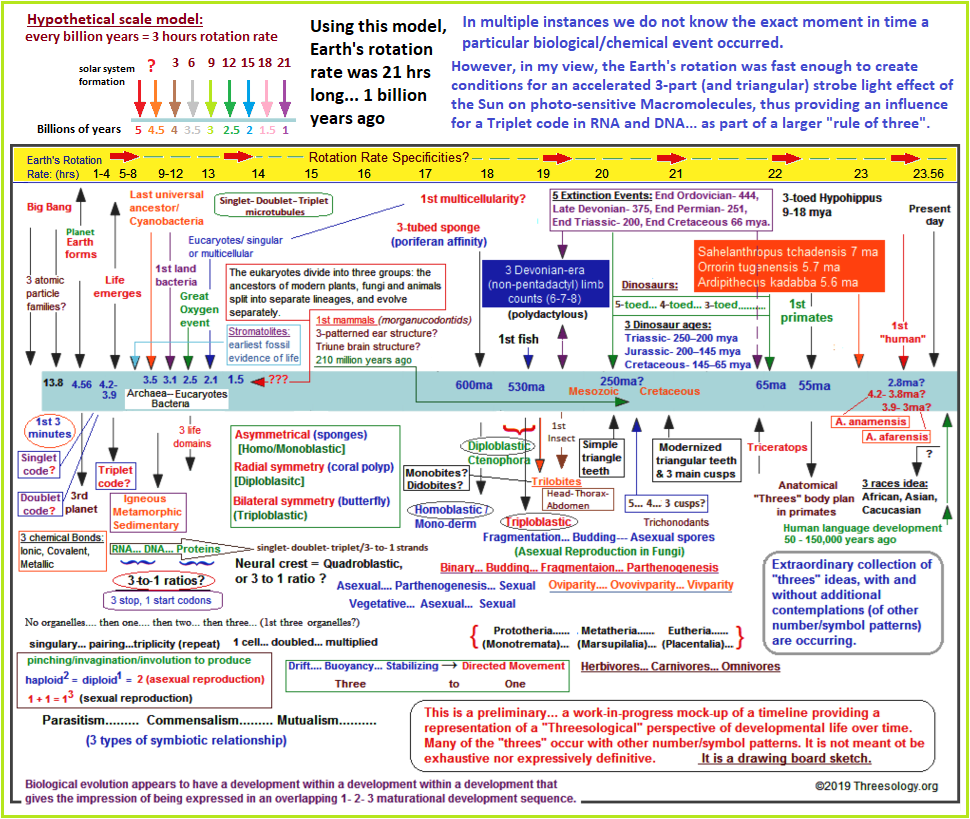
The "Triplet Code" to which I am referring is that code found in DNA and RNA, and not the larger one involving multiple subjects, but it is necessary to infuse a realistic appreciation of what is being discussed overall in terms of human cognitive activity. This means that is it of value to take stock of 'Triplet Codes' found in other subjects with different models being identified, but that they all share what can be called a conserved triple repetition. In other words, we do not see Nature moving the triplet code of DNA into the Evolutionary ground of becoming a 4, or 5, or 6, or 7, or 8, or 9, or more code. Hence, it remains at three, and those references to a "4" can alternatively be viewed as a 3 to 1 ratio though many prefer to use the "4" or "four" or "quaternary" as if it helps to contextually simplify an observation that is typically used by those whose orientations are singularly minded and not conserned with the simultaneous acknowledgement of a similarity of patterning found in other "cognitive substrates" commonly referred to as different disciplines of exploration. And even though it is a given that subjects are taught with an accepted premise of helping stundents to identify workable correlations of patterning between different subjects; this expectation involves a standardized model of accepted allowances arrived at by those having been cited as some authority in a given subject.
The conserved code remains at "three" though Nature has had ample opportunity to display its creative potential... which it does by developing a myriad of life forms which look and act differently in a general sense, but beneath the multiplicity of life forms, the triplet code of DNA remains steadfast... as if there was and continues to be what I believe to be an external force that we do not need to resort to the vocabulary of religion in order to define... such as with the word God. I think the influence is a bit more pedestrian than this, and involves the Sun's 3 daily phases (or "moments") labeled as dawn- noon- dusk and the fast rotation rate of the Earth billions of years, while both the Sun and Earth (and moon) continue on a path of deterioration.
Similarly, when discussing the conserved presence of the DNA triplet code among a myriad of life forms, the presence of a myriad of ideas which often exhibit a triplet pattern, suggests the correlation has more parity than merely subjecting the idea to some disparagement by calling the idea the product of Numerology, Mysticism, Superstition, Obsession, or otherwise. Indeed, many of our ideas expressing a Three Value can be viewed as being conserved.
We say that the triplet code of DNA is conserved, but we don't customarily say...
- That the triple postion of the Earth is conserved as well.
- So (are) is the 3 laws of motion and 3 laws of planetary motion.
- So is the use of three fingers to hold a pen or pencil.
- So is the triple arrangements found in word orders such as the subject-object-verb.
- So is the triple pattern seen in the 3 families of fundamental particles.
- So is the three Germ layers.
- So is the 3 life domains (Archae- Bacteria- Eucaryota)
- So is the AMP- ADP- ATP triad of cellular energy.
- So is the multiple (threes found in human anatomy.)
- So is the occurrence for 3 strikes and you're out in baseball.
- So is the occurrence for 1-point, 2-points, 3-points in basketball.
- So is the situation with the highest financial status signified by the word trillion or trillionaire.
- So is the 3 Latin honors system used in several colleges: Cum laude, Magna cum laude, Summa cum laude.
- So is the Olympic medal triad: Bronze- Silver- Gold.
- So is the triple crown of Thoroughbred racing.
- So is the three foundation stallions of stud book Throughbreds: Goldophin barb/Arabian- Darely Arabian, Byerly Turk and their 3 direct line descendants: Matchem- King Herod- Eclipse
- Etc...
Let me ask if we are actually on the 3rd planet, or do we only think we are because of some unrecognized proclivity for adopting a triad-styled conservation formula used as an intellectualized survival mechanism which influences the contrustruction of multiple mental adaptations involving an underlying three pattern concealed sometimes in the same manner that the forms of different life conceal a similar triplet code conservation? In other words, though life forms do not readily show the triplet code on their sleeves... so to speak, multiple ideas from different subjects do, though not all of them. Many ideas are concealed with vocabulary, gestures, and assorted items of behavior we might consider using the word camouflage to describe.
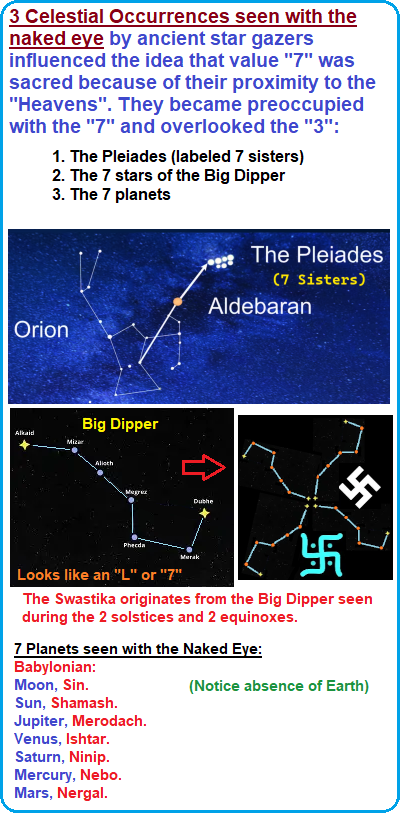
And as an aside, for those who knee-jerkedly respond with an interest in 7s, such an interest can be linked to three ancient starlit sources having influenced the idea that this value was sacred... according to the interpretations of ancient star gazers... thus illustrating yet another conservation of three:
- The seven stars of the Pleiades (labeled 7 sisters)
- The 7 stars of the Big Dipper
- The 7 planets
The influence of the so-called sacred number 7 has been applied to other ideas such as:
- 7 liberal Academic arts in Medieval society, divided into a Quadravium (4 scientific arts): music, arithmetic, geometry, and astronomy and a Trivium (3 humanity arts): grammar, logic, and rhetoric.
- 7 gun salute at Military funerals: 7 guns fired 3 times each, for 21 reports.
- In childhood I played a variation of hide-n-seek called "3 sevens are 21, go sheepy go".
But providing the foregoing does not exhaust the list of 7 examples, many of which are today still seen in religious contexts and must admit to the realization they are a holdover from a bygone era of stargazing influences labeled as "sacred" because they existed in the cosmology of a once deemed "firmament" or abode of the god(s). While I do not want to belabor the list, a quantity should be attempted to provide a large enough view of how strained the application of "7" is because it is rendered in personalized accommodations meant for others to share in belief and customized forms/formulas of interpretation. As an example of a contributing list, we could supply ourselves with some from ancient Greece secured from this site: (The Perfection of the Number 7: Why the Ancient Greeks Considered It Magical). However, the explanation given in this article for the use of 7 in so many ideas is simply described as a mystery, without any association to ancient star gazers and their influence on religion and those who were influenced by religion.
- Seven Wonders of the World [The Greeks revered 3 as a symbol of harmony and 4 as a symbol of balance—together forming 7, a number seen as complete and divinely powerful.]
- The Seven Seas- Aegean, Mediterranean, Adriatic, Black, Red, Caspian, Persian Gulf.
- For the followers of Pythagoras, 7 was the "perfect" number—combining 3 (representing the soul or spirit) with 4 (representing matter). This fusion symbolized the unity of heaven and earth, spirit and substance.
- Geometrically, 7 was unique. Arranging 7 points in a circle does not yield a symmetrical shape, a fact that only deepened its air of mystery and reverence.
- The Seven Against Thebes - In Aeschylus’s tragic play Seven Against Thebes, seven Greek champions lay siege to the seven gates of the city.
- Apollo’s lyre was strung with 7 cords.
- Odysseus spent 7 years on Calypso’s island.
- Apollo was said to herd 7 flocks of sacred cattle.
- Spartan boys began their rigorous state-sponsored training at the age of 7, marking a crucial rite of passage.
- The Seven Metals of Antiquity - Gold, copper, lead, tin, mercury, silver, and iron—these seven metals were known to the ancient world and formed the foundation of early technology and alchemy.
- Islam -
- Certain interpretations of Islamic tradition mention up to 7 wives permitted for a man, and the pilgrimage rites of Hajj include circling the Kaaba seven times.
- Allaah created seven heavens, seven earths and seven days. ( What is the secret of the number 7 and its multiples in the Holy Qur’aan and Sunnah?)
- Man’s creation is completed in seven stages.
- Allaah has prescribed that His slaves should walk around the Ka’bah seven times (tawaaf) and go back and forth between Safa and Marwah seven times (saa’i), and
- stone the jamaraat with seven pebbles each.
- The takbeeraat of Eid are seven in the first rak’ah.
- The Prophet (peace and blessings of Allaah be upon him) said: "Instruct your children to pray when they are seven."
- Judaism - Significance of numbers in Judaism Note: The seven branch Menorah (candle holder) from antiquity has been joined in later ages with a nine branch design, though the idea of a developmental (Evolutionary) change in human cognition reflected in the usage of enumerations is not customarily considered. ( 7-Branch vs 9-Branch Menorah: What’s the Difference?)
- Jews claim that Noah had 7 of each animal, while the Bible claims two of each. This may be a difference highlighting a cognitive transition from earlier processing to later mental processings which divulge a changing mental/brain landscape that is otherwise overlooked. Judaism is an older mental tradition, Christianity is a later one.
- The Moon and Time- Each lunar phase spans roughly 7 days—forming the basis of the 7-day week used worldwide today.
- The Rainbow- Rainbows display 7 distinct colors: red, orange, yellow, green, blue, indigo, and violet—another natural occurrence echoing this symbolic number.
- Music and Language- Byzantine musical theory includes 7 notes: PA, VOU, GA, DE, KE, ZO, NI. (More modern musical theory contains Triads.)
- Modern psychology suggests the average person can instantly recognize and process up to 7 items—known as the "magical number seven" in cognitive science. (The full
- title of the paper written by George A. Miller is The Magical Number Seven, Plus or Minus Two.
- If we view this as a math equation we get: 7 - 2 = 5, 7 + 2 = 9. Hence, we get three numbers: 5-7-9.)
- Geographical Significance- The Ionian Islands are traditionally counted as 7: Corfu, Kefalonia, Zakynthos, Ithaca, Lefkada, Kythira, and Paxos.
- Seven continents view: 7 continents of the world
- Asia includes 50 countries, and it is the most populated continent. More than 60% of the total population of the Earth lives here.
- Africa comprises 54 countries. It is the hottest continent and home to the world's largest desert, the Sahara, occupying 25% of the total area of Africa.
- North America includes 23 countries, led by the United States, the largest economy in the world.
- South America comprises 12 countries. Here is located the largest forest, the Amazon rainforest, which covers 30% of South America's total area.
- Antarctica is the coldest continent in the world, completely covered with ice. There are no permanent inhabitants, except for scientists maintaining research stations in Antarctica.
- Europe comprises 51 countries. It is the most economically developed continent, with the European Union as the biggest economic and political union in the world.
- Australia includes 14 countries.
- Constantinople (now Istanbul) was historically known by 7 different names, including Byzantium and New Rome.
Multiples of single numbers notwithstanding, one can suggest some significance to any pattern if they so desire... thereby emphacising one example more than another, such as citing the presence of the "three" in more important areas of study. For example, by stating the "three" exists in physics and genetics as well as biology, one might insist such examples hold more evidentiary weight than itemizing seven in a handful of contexts, even if each example is declared as having a high importance by those who like a given pattern and are self-persuaded to propose some significance based on a small subset of examples. Indeed, other types of pattern viewed in Nature might be claimed by the respective observers to be a Universal code or language, thus deserving to be counted as a 'conserved' state of identity.
Are our assignments of given patterns of enumeration a tell-tale sign of an ongoing development in human cognition such as defined by a 1-2-3 sequence (though the 1st and 3rd stages may be lost to history, not easily recognized, or have not yet formed); whereby, for example:
- The usage of a Binomial Nomenclature in Biology is a recurring "two" orientation of manifestation seen in the:
- Ancient idea of the Chinese Yin/Yang (followed by the attempted I-Ching Triads).
- Divine couples in early religious leaderships, dual identities, ominous/auspicious twins, dualities in mythology..., followed by multiple instances of triads, trinities and triunities.
- Persistent dichotomies practiced in Psychology (creating treatment problems for those whose orientation is three focused and not binary).
- Dichotomies forming the basis for Mathematic reasoning (which have in some cases adopted three-based formulas such as trigonometry, three-body problem, Pythagoran formula...).
- Binary language in computers (zeros and ones based on the electric circuit)... Quantum computer idealists are looking to use a trinary language.
Is there some underlying cognitive proclivity to recognize... and then to collate... and then assign some reference of universality to a given pattern or patterns but rarely contemplate where the initial influence may originate other than to supply the ancient notion of a god or gods... generally called "Nature" in today's varying cultural environments; but to suggest an alternative to the God(s) or Nature generalization that is testable beyound supposition, is to garner not but negativity? While we can see multiple patterns and collate them, most often most people leave the idea of origination to ideas such as a god(s) or some Natural process, without considering that the assumed god and natural process statement can be experimentally certified or falsified... even though, in terms of religion, multiple people the world over collect ideas used to refute a given perspective?
Do we try to supplant, subvert, or suppress the demonstration of a given pattern by seeking some dominant position of pattern recognition by tabulating different sytles of patterning into a singular context that is reminiscent of someone "throwing a wrenc into the works" whereby they are called in as a resident expert to "sort things out" in a conventionalized way, and those who attempt some new idea are to be viewed as tinkerers dabbling in the construction of a contraption, jalopy, thingamajig, thingamabob, dohicky or far fetch inventor's folly? Does a collection of a myriad of suggested patterns, usurp the value of a single pattern? Is this type of "many" proportionatly more valuable than a single pattern being elucidated?
Do all the patterns we humans recognize represent a majority which exist in Nature or are we to apply a large scale Negativity to Humanity and assign the only possibility of doing so to some god or characterization called Nature, due to referencing the electro-magnetic spectrum and supposed biological defeciencies in physiology? Then again, is it of profit for humanity to know every single existing particle, wave, or numinous existent, or does our greatest potential lay in the currency of our endowed potentials of presumed limitation? Or can it be we refuse to enumerate and collate the perceived patterns into some functional hypothesis or equation because we fear upsetting some traditiona view held by the differening leaderships of the world who have a cotterie of supporters that might make your life a living hell if told to publicly confront and refute your views?
Indeed, are the triplet patterns somehow linked and this link to be described in relgious terms such as the Christian trinity, Hindu Trimurti, or ancient Greek or ancient Egyptian tripartite mythology? Or could it be one or more of the triple patterns in anatomy, or biology, or DNA? Or perhaps all of these examples and many others can best be explained as representative impression of an environmental event which began long ago and continues today?
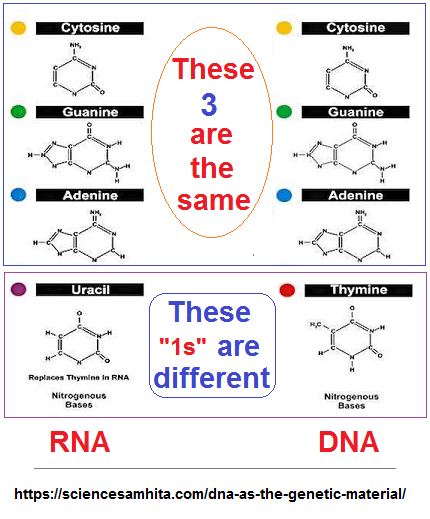
For example, while a triplet code is identified, discussions also speak of four amino acids, but such references fail to describe the four of DNA in concert with the so-called 4 of RNA. If such a comparison were made, and the investigator was aware of the 3 to 1 ratio idea, they would then recognize a concerversation which could be expressed as a "3 the same and 1 is different":
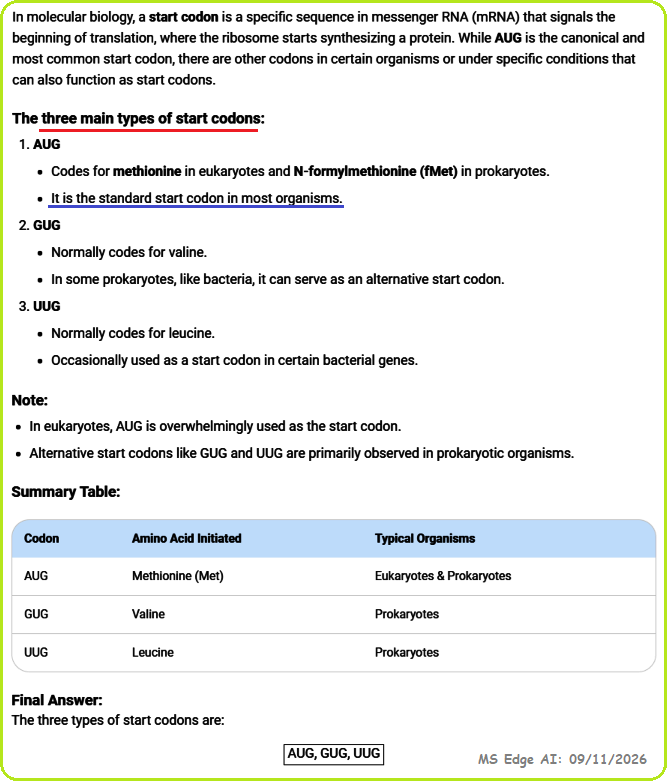
We again find this ratio as part of the overall "triplet" conservation when we identify the 3 stop codons (UAA, UAG, and UGA.) and 1 start codon (AUG is the canonical and most common start codon):
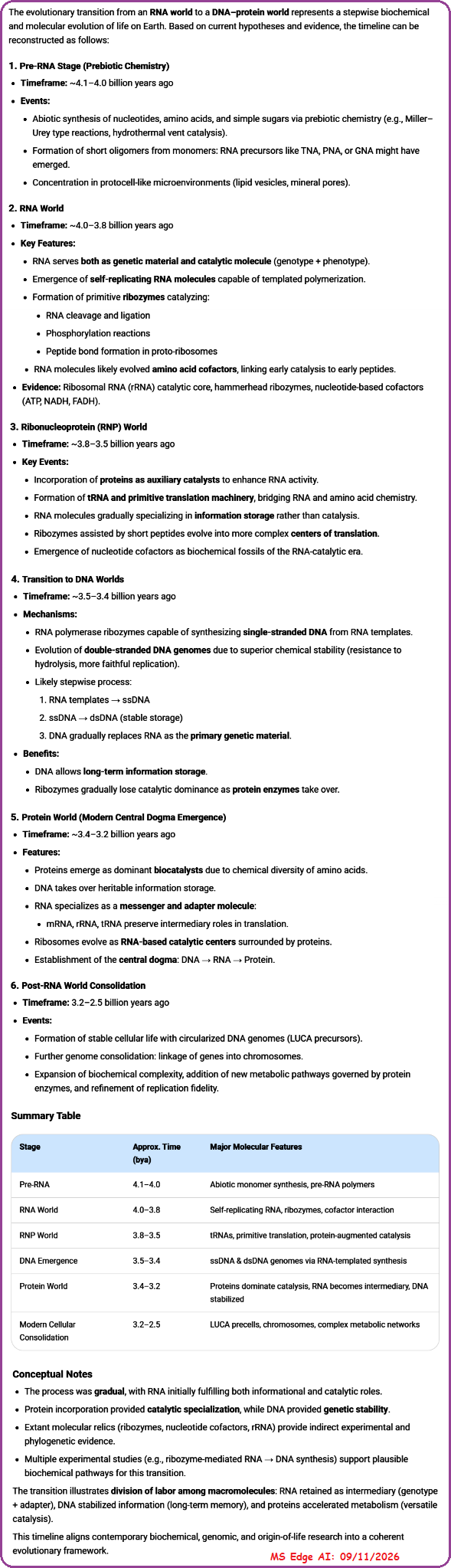
Whereas we can now see the presence of the triplet code and the proposed 3 to 1 ratio distinction, let us not overlook the developmental sequence of RNA, DNA and Protiens... illustrated simply by highlighting a 1- 2- 3 sequence in the quantity of strands. For instance, the 1st appearing RNA was rendered with a single strand. The next sequence of biological development had DNA which may have been initiated as a single strand, but has a now established double strand. The 3rd member of this to-be developed trio is proteins, of which a prime example is the triple stranded Collagen.
Again, let us note that in order to get to a "three code", there may well have been a single and then a binary sequence which is overlooked as part of the larger biologically active evolutionary development which is difficult for some to think of, much less grasp, because the RNA to DNA to Proteins typically is not viewed as one might think of in terms of an Homology of species. No less, with respect to enumeration, one might not want to use the reference Ordinal as described by mathematics, so as an aside contemplation, let us look at the tripartite stance of Cardinality, Ordinality, and Nominality of Numbers:
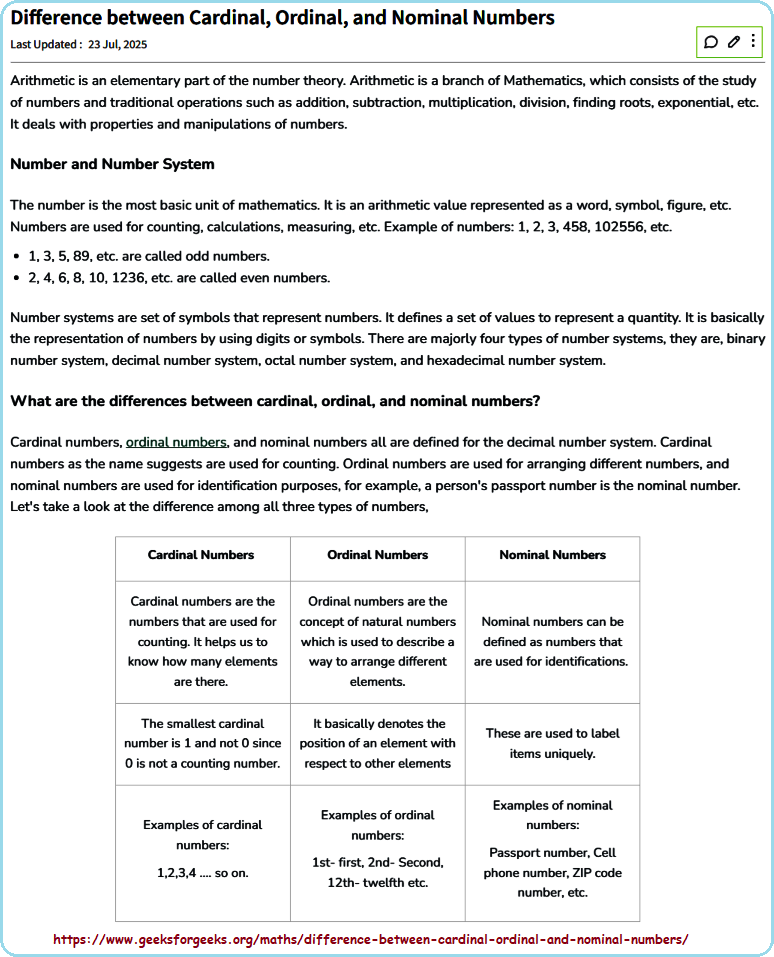
Difference between Cardinal, Ordinal, and Nominal Numbers
In summary, we have a 1 → 2 → 3 developmental sequence. Clearly, the advent of life in what is labeled the RNA world followed by a DNA world then a Proteing world, provides evidence for the enumerated sequentiality in that RNA typically is single stranded, DNA typically is double stranded (with some possible instances of both single and triple stranded forms), and then the staging of triple-stranded proteins like Collagen and the functionality of protein development with a primary- secondary- tertiary- quaternary structure; where the primary structure is differentiated from the others with its bead-like structure in contrast to the others' ribbon structure... suggesting we need to formulate a new label for a different organzational attitude such as a revealed 3 -to- 1 ratio also seen in Mendelian genetics... as well seen in the cognitive catergories found in other subjects: 3 to 1 ratios page 1
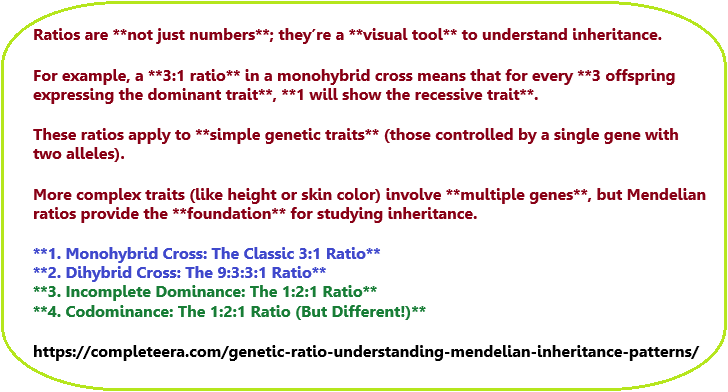
Genetic Ratio: Understanding Mendelian Inheritance Patterns
The consideration of a developmental sequence from RNA to DNA to Proteins, elucidates the presence of three stages of RNA, but it doesn't mention the differences in strandedness as an associated pattern of developmental progression, with "strandedness" in proteins more commonly referenced in terms of a 3 dimensional structure originating from a single poly peptide chain transitioning into greater complexity, with this type of defined patterning reminiscent of the idea that early humans developed a measure of counting by using the three-patterned cognitive sequence of one- two- Many... hence, "mulitiplicity" is synonymous with the "many" in relative terms, though other terms might well be used such as pile, bunch, alot, heap, poly, more, much, etc... (where in older literature we can find the use of the word "divers" and many people nowadays resort to using the word "ETC.")
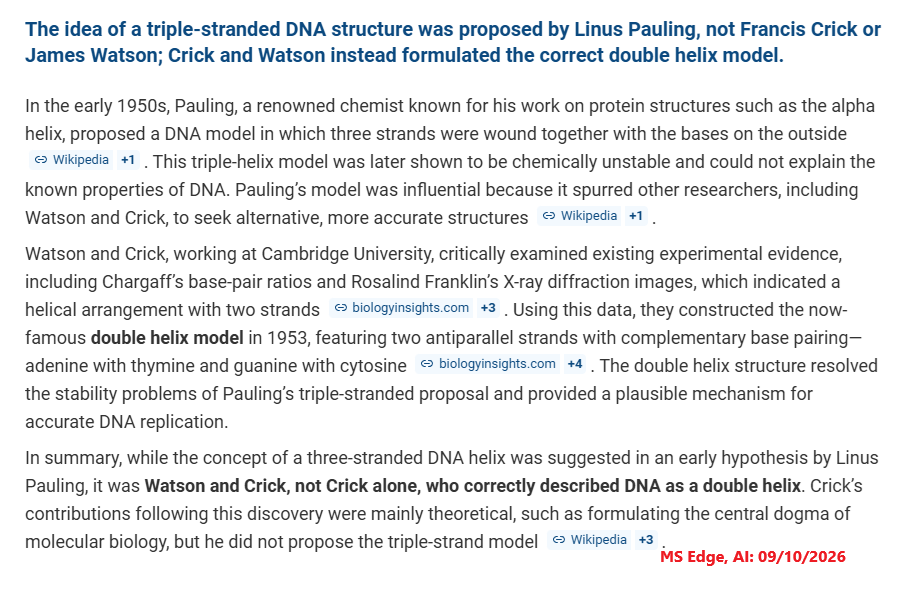
Let it be noted that the idea of a triple-stranded DNA structure was formulated by Linus Pauling. (In the early 1950s, Watson and Crick
were in a race with California Institute of Technology chemistry professor Linus Pauling to unravel the structure of DNA, a molecule that had
been isolated from the nucleus of cells way back in 1869 by Swiss biologist Friedrich Miescher. The molecular structure of DNA — and a dream staircase that wasn’t.)
Typically, the idea of an origin for many people involves thinking in terms of an internalized process of chemical activity which eventually settled on a Triplet design. More often then not, if you ask a biologist what is the origin of the genetic code, they may generalize and cite you the development of the DNA triplet code idea began with James Watson, Francis Crick, along with Rosalind Franklin and Maurice Wilkins; but these individuals were involved most prominently with the double helix structure... and it was Marshall Nirenberg, Har Gobind Khorana, Robert Holley, Sydney Brenner, and Francis Crick who gained acknowledgement for elucidating the presence of a triplet code. However, because there is no precedent for thinking in terms of why a triplet code was chosen by life's processes, the question (in terms of how I am posing it), may not be understood until it is emphacised I am speaking about processes occurring billions of years ago. Nonetheless, most often I encounter those who resort to a chemical explanation because the idea of a "triple code" involving multiple cognitive examples is not customarily brought up in chemistry or biology classes, much less Philsophy. Take a look at the following excerpt as an example of the general state of multiple current views involving the development of the Triplet Code:
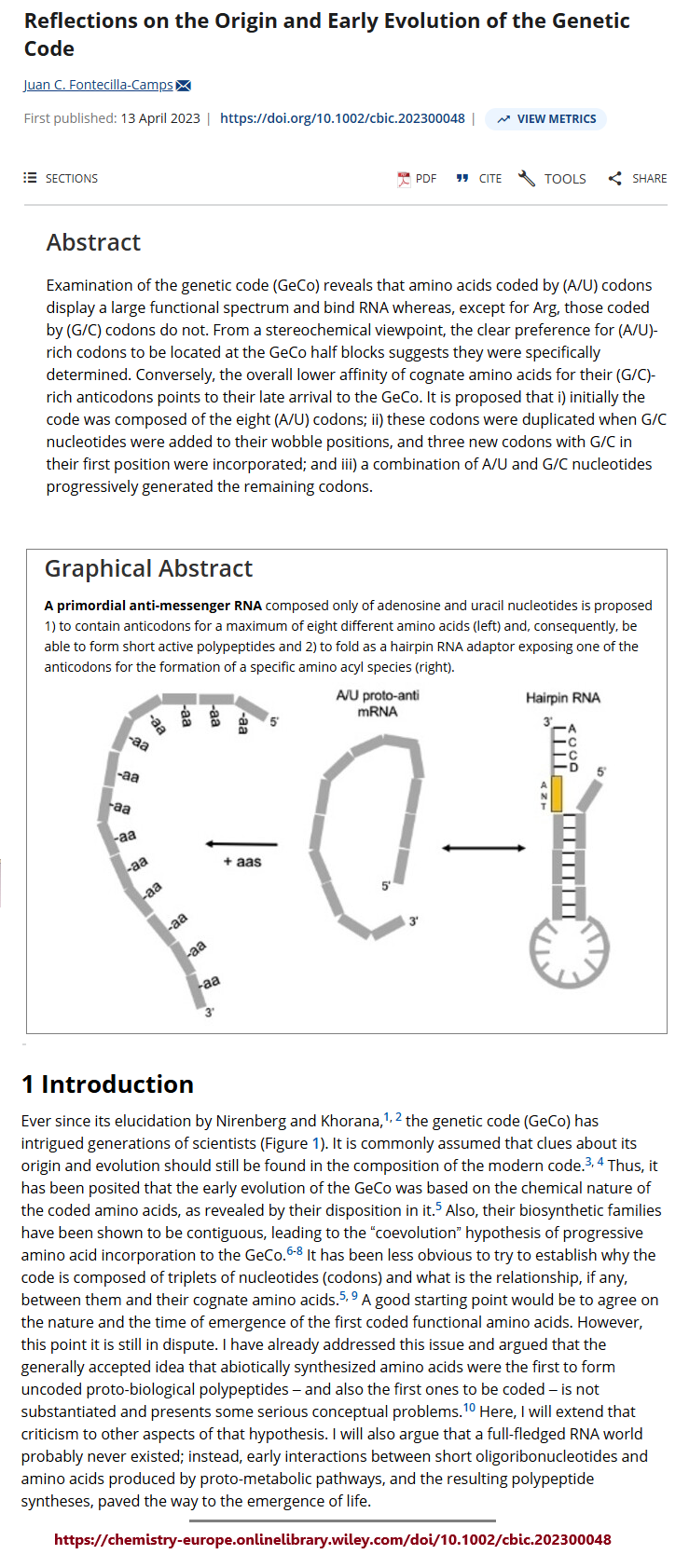
Reflections on the Origin and Early Evolution of the Genetic Code by Juan C. Fontecilla-Camps
However, and even though this page is titled "Triplet Code origin" and I initially meant to focus on this specificity... I must allow myself to introduce a larger composite of "threes patterns" I am thinking about as having had some impetus for such a recurring pattern's usage in the cognitive processing of humanity. Rather fortuitously one might think, we can describe a rather crude timeline of events which exhibit this pattern since I feel the triplet code is but one of hundreds of examples of the "threes" patterns that I am not in any way trying to describe some contemporary interpretation often provided by some religious orientation. Since the pattern occurs in many explorations of observation from multiple subject areas, it is of need to catalog the examples to be contemplated by different people with different orientations in their respective field or fields of interest. Thus, while you may be influenced by the heading of this page to selectively focus on the triplet code, the triplet code pattern shows up in such a variety of eras and ways, that it behooves us to take a closer look at what has been the initial origination force for human cognition to use the pattern whether or not many old cultures do not have an awakened sense of realization as do later born cultures or those old cultures, due to demands for increased adaptation to innovations so as to maintain some equanimity for economic, military or educational purposes... have adopted particularities of later born cultures... while trying to infuse ideological concerns of the past with ideas of the present.
In addition, let me note that both past and contemporary Philosophers, Psychologists, Sociologists, Historians, Theologians, Anthropologists and others... have not adequately addressed the topic of "threes recurrences" though there have been multiple efforts to do so. Invariably, their efforts have been made with a limited knowledge of the very large currency of "threes" and its place alongside other enumerated (as well as geometric) streams of consideration in understanding human cognition in our particular environment with a surprising "threes" recurrence in anatomy. Let me further note that those ideas involving a larger enumeration can frequently be organized in a framework involving small than three enumerations and those ideas which are flamboyantly expressed in more-than-three terms such as there being multiple dimensions; from my perspective this describes the presence of an imaginative ability, but it is so often confronted by recurrences that remind me of standard human memorization efforts versus those few who appear to illustrate a capacity for a larger memorization base... if we find methods of either teaching it or learning on our own. In other words, the use of "threes" appears in some cultural instances to be more pronounced than other enumerations even while an infinity of numbers exist... humanity uses very few... suggesting a cognitive limitation due to constraints built into our physiology initiated by environmental pressures including planetary ones... and no, I am not advocating Astrological orientations as being correct as they are presently practiced... even though there is an underlying pattern-of-three recognized in the study by its more serious students.
Here's a short list of threes examples which exhibit a rough timeline of development of humanity's cognitive orientation seen through different lenses of orientation:
- 3 Origin-of-the-Universe Models:
- Big Bang Model- The Big Bang Model is the leading scientific explanation for the universe’s origin.
- Steady State Hypothesis- The Steady State Hypothesis was a major alternative in the mid?20th century. It held that the universe has no beginning or end and looks the same at all times and places (Perfect Cosmological Principle).
- Inflationary Universe Model- The Inflationary Universe model refines the Big Bang by adding a brief period of exponential expansion a fraction of a second after the start.
- 3 shapes to the Universe. (If they actually portray 3 perspectives (vantage points) of a single entity, we have a 3 in 1 ratio.)
- Spherical (Closed) Universe
- Flat (Euclidean) Universe
- Hyperbolic (Open or Saddle-Shaped) Universe
- 3 Main Percentages of the Universe: (These proportions come from precision measurements, such as those from NASA’s Planck satellite and
other cosmological observations. They define the ?CDM model {Lambda Cold Dark Matter}, the standard model of cosmology, which explains the
universe’s large-scale structure, evolution, and fate.)
- Ordinary (Baryonic) Matter – ~5%
- Dark Matter – ~27%
- Dark Energy – ~68%
- 3 dimensions: Height- Length- Width/Depth (adding Time makes the count a 3 to 1 ratio)
- 3 fundamental forces agree with the Standard Model of Physics: Strong- Weak- Electro-magnetic (adding Gravity gives a 3 to 1
ratio)
- Electromagnetic Force: Mediated by photons, responsible for electric and magnetic interactions.
- Weak Nuclear Force: Carried by W and Z bosons, governing processes like radioactive decay.
- Strong Nuclear Force: Facilitated by gluons, binding quarks together within protons and neutrons. (Definition and Scope of the Standard Model)
- 3 Families of fundamental particles: Quarks, Leptons, Guage-Bosons

- 3rd planet from Sun (Earth) is the only known place where complex life exists
- 3 dominant forms of Matter on Earth: Solids- Liquids- Gases. (adding Plasma makes the count a 3 to 1 ratio)
- 3-patterned strobe-light effect of dawn-noon-dusk occurred when Earth was rotating much faster than today
- 3 cellular energy sources: AMP, ADP, and ATP (AMP, ADP, and ATP are nucleotide molecules that store and transfer energy in cells, with ATP being the primary energy currency, ADP an intermediate, and AMP a key energy-sensing signal.)
- 3 primary sources of cellular energy are carbohydrates, fats, and proteins
- 3 types of life: Archaea- Bacteria- Eukaryote;
- Archaea are also single-celled prokaryotes but differ from bacteria in their genetic and biochemical makeup. They are often extremophiles, thriving in harsh environments such as hot springs, salt lakes, and deep-sea vents.
- Bacteria are single-celled prokaryotic organisms without a nucleus or membrane-bound organelles. They have been present on Earth for over 3.5 billion years and are found in almost every habitat, from oceans to soil and inside other organisms.
- Eukaryotes are organisms with cells containing a nucleus and membrane-bound organelles like mitochondria and chloroplasts. (This domain includes plants, animals, fungi, and protists.)
- 3 main types of archaebacteria: Methanogens, Halophiles, Thermophiles
- Methanogens are archaebacteria that produce methane gas as a metabolic byproduct. They are strict anaerobes, thriving only in oxygen-free environments such as swamps, wetlands, marine sediments, and the digestive tracts of ruminants and humans.
- Halophiles are salt-loving archaebacteria that flourish in highly saline environments, including salt flats, salt mines, and hypersaline lakes. They have specialized proteins and cellular mechanisms that stabilize their structures against dehydration caused by high salt concentrations.
- Thermophiles are heat-loving archaebacteria that thrive in extremely hot environments such as hot springs, geothermal vents, and hydrothermal systems. Their enzymes and proteins are thermostable, functioning efficiently at elevated temperatures, sometimes exceeding 100°C. Thermophiles include subgroups like hyperthermophiles and thermoacidophiles, which can also tolerate acidic conditions.
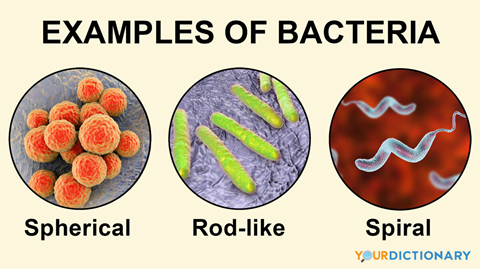
- 3 main types of bacterial cells based on shape: Spherical, Rod-shaped, Spiral-shaped
- Cocci (Spherical Bacteria): They can exist alone (monococci), in pairs (diplococci), in chains (streptococci), or in (staphylococci).
- Bacilli (Rod-Shaped Bacteria): They may appear singly or in chains.
- Spirilla (Spiral-Shaped Bacteria): They may be rigid or flexible and often move with flagella.
- 3 main types of Eukaryotic cells: Animal cells, Plant cells, Fungal cells, each with distinct structures and functions.
- Animal cells are eukaryotic cells that lack a rigid cell wall and chloroplasts. They typically have an irregular shape, a plasma membrane, and contain various organelles including a nucleus, mitochondria, endoplasmic reticulum, Golgi apparatus, and lysosomes.
- Plant cells are eukaryotic cells that have a cell wall made of cellulose, chloroplasts for photosynthesis, and a large central vacuole that helps maintain turgor pressure.
- Fungal cells are eukaryotic cells that have cell walls made mainly of chitin and lack chloroplasts. They are heterotrophic, meaning they obtain nutrients by absorbing organic material. Fungal cells may be unicellular (like yeast) or multicellular (like molds), and they share many organelles with animal cells, such as a nucleus, mitochondria, and endoplasmic reticulum.
- 3 main types of photosynthesis: C3, C4, and CAM (crassulacean acid metabolism).
- 3 stages of photosynthesis (some textbooks and AI generators list only two):
- Light-dependent Reactions
- Calvin Cycle (Light-independent Reactions)
- Optional 3 stages in some textbooks:
- Photon absorption and water splitting (part of light reactions)
- ATP and NADPH formation (part of light reactions)
- Carbon fixation and glucose production (Calvin cycle)
- 3 Major regions of cell wall: Middle Lamella- Primary cell wall- Plasma Membrane or Primary-Secondary-Middle Lamella
- 3 Primary differences between Animal and Plant cells: structural components, energy storage, and the presence of cell walls and
plastids...
- Plant cells have a rigid cell wall, Animal cells lack a cell wall
- Plant cells contain chloroplasts, Animal cells do not have chloroplasts
- Plant cells feature a large central vacuole, Animal cells contain smaller, more numerous vacuoles
- 3-part description of cell wall (both exhibit a pattern-of-three stated differently):
- Previous era interpretation- it has a Trilaminar appearance
- Current era interpretation- it has a Bilipid + Protein/Carbohydrate rich layer)
- 3...Triplet microtubules are a specialized microtubule arrangement found only at the proximal ends of centrioles in eukaryotic
cells. (Nine of these triplet sets are arranged radially with nine-fold symmetry around a central hub, known as the cartwheel, forming
the cylindrical wall of the centriole.) Each triplet consists of three microtubules.
- A-tubule: a complete microtubule composed of 13 protofilaments, forming an oval-shaped ring, structurally similar to a canonical cytoplasmic microtubule.
- B-tubule: an incomplete microtubule with 10 protofilaments that shares four protofilaments (A10–A13) with the A-tubule, creating a stable connection.
- C-tubule: another incomplete microtubule with 10 protofilaments, attached to the B-tubule through shared protofilaments (B5–B8).
- 3 main types of microtubules based on their arrangement and function within cellular structures like the mitotic spindle:
- Kinetochore Microtubules (K-Microtubules): Extend from the spindle poles and attach to the kinetochores of chromosomes.Responsible for the movement of chromosomes during cell division (mitosis and meiosis). They help pull sister chromatids apart toward opposite poles during anaphase.
- Interpolar Microtubules (Polar Microtubules): Project from each spindle pole toward the center of the cell. Overlap with microtubules from the opposite pole. Provide structural support and push the spindle poles apart, helping to elongate the cell during division.
- Astral Microtubules: Radiate outward from the centrosomes toward the cell cortex. Help anchor the spindle apparatus to the cell membrane. Assist in positioning the spindle and orienting the dividing cell correctly.
- 3 Germ layers exhibiting a 1-2-3 developmental sequence of animal life from the simple to more complex animals:
- Ectoderm- (Mono/Uniploblastic) One layer of cells such as the sponges.
- Ectoderm/Endoderm- (Diploblastic) Two layers such as found in the Cnidaria (11,000+ species) and Ctenophora (200+ species).
- Ectoderm/Mesoderm/Ectoderm- (Triploblastic) Three layers found in all complex organisms from earth worms to humans.
- 3-patterned anatomy: McNulty's list of threes in human anatomy
- 3 animal feeding types: Carnivore, Herbivore, Insectivore
- 3 main types of symbiosis:
- Mutualism (both organisms benefit)
- Commensalism (one benefits while the other is unaffected)
- Parasitism (one benefits at the host’s expense)
- 3 main types of blood vessels: arteries, veins, and capillaries
- 3 main types of blood clots: arterial clots, deep vein thrombosis (DVT), and pulmonary embolism (PE).
- 3 main types of blood cells:
- Red blood cells (Erythrocytes), 40-45% of blood.
- White blood cells (Leukocytes), 1% of blood.
- Platelets (Thrombocytes), 150,000–400,000 platelets in each microliter of human blood.
- 3-lettered, widely used blood typing system: A- B- O (yes there are combonations, yes there are other typing systems)
- ETC...
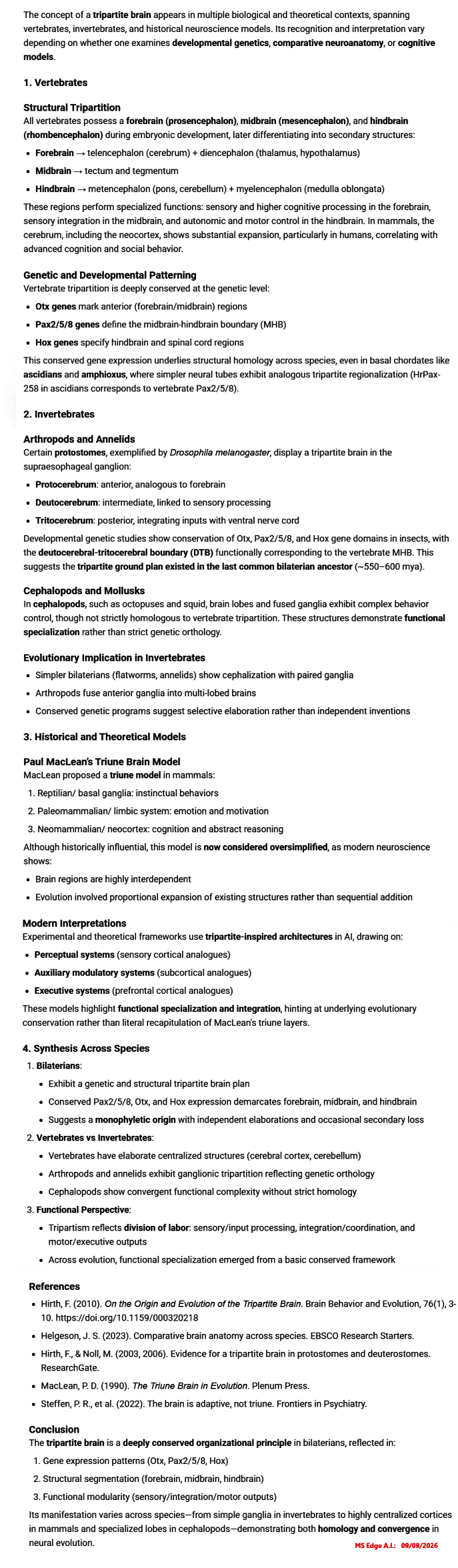
Tripartite brain structure identified in multiple species:
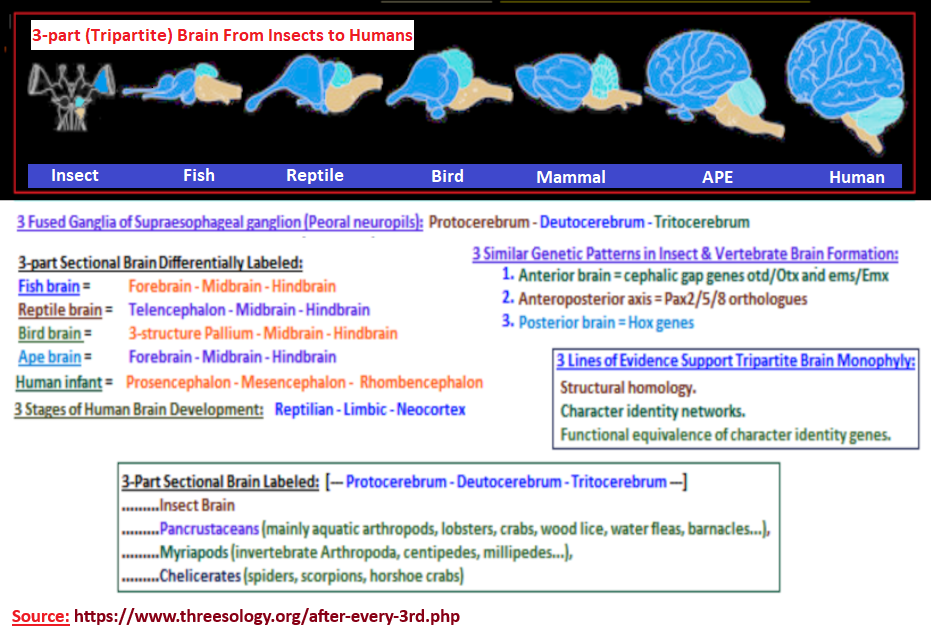
Image Source: After Every Third
``````````````````````````````````````````````````````````````````````````````````````````````````````````````
The following is an example of the contemporary view of how the triplet code may have come about:
Abstract
Reconstruction of the earliest proteins in the ancient binary alphabet [glycine family G, alanine family A] leads to repeats of G alternating with repeats of A. In addition, omnipresent motifs can be assembled in two of the earliest genes involved in energy supply, crucial for Life, i.e. ATP/GTP binding and ATPase activity. They are an almost perfect match to the alternating G and A and are complementary to each other.
Introduction
Enormous databases of nucleotide and amino acid sequences of modern organisms, a collective labor of already two generations of molecular biologists, may be viewed as a depository of invaluable experimental material, which awaits large scale theoretical work to unravel the loads of unknown meanings hosted by these sequences. The theory, in general, is lagging well behind the mounting data. One exception is the rapidly developing theory of early molecular evolution [32], [33], [28] that started with the assumption that the sequences, active in the earliest eras of Life, are still around, some even, perhaps, unchanged. For example, the repeating sequences (GCU)n and (GCC)n of triplet expansion diseases may have survived 3.9 billion years of Life exactly because of their exceptional ability to expand [34]. Below, I briefly review the theory and outline the latest developments.
Source: The origin of the genetic code and of the earliest oligopeptidesby Edward N. Trifonov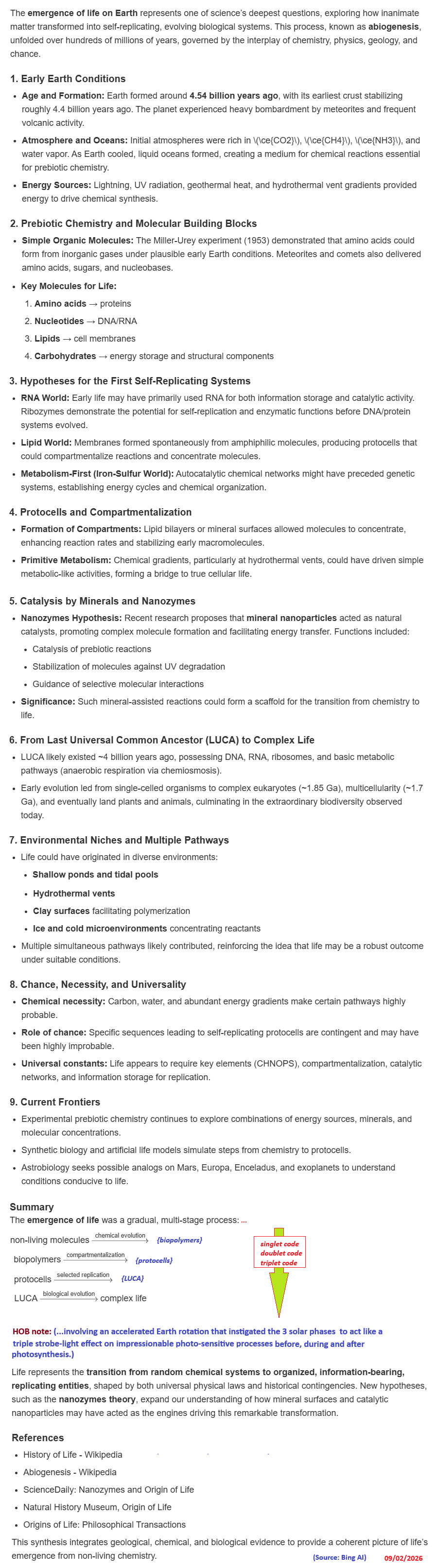
While you might want to incline yourself to believe in the views of practicing geneticists, others might want to consider the plausibility of my speculation that the triplet code influence came from outside the chemical processes occurring billions of years ago— which forced the early chemical processes to mimic its influence; whereby those chemical processes as they existed, necessarily moved along a single- binary- trinary pathway. I believe the triplet influence came from the sun's phases ("moments") know as Dawn- Noon- Dusk when the rotation of the Earth billions of years ago was accelerated.
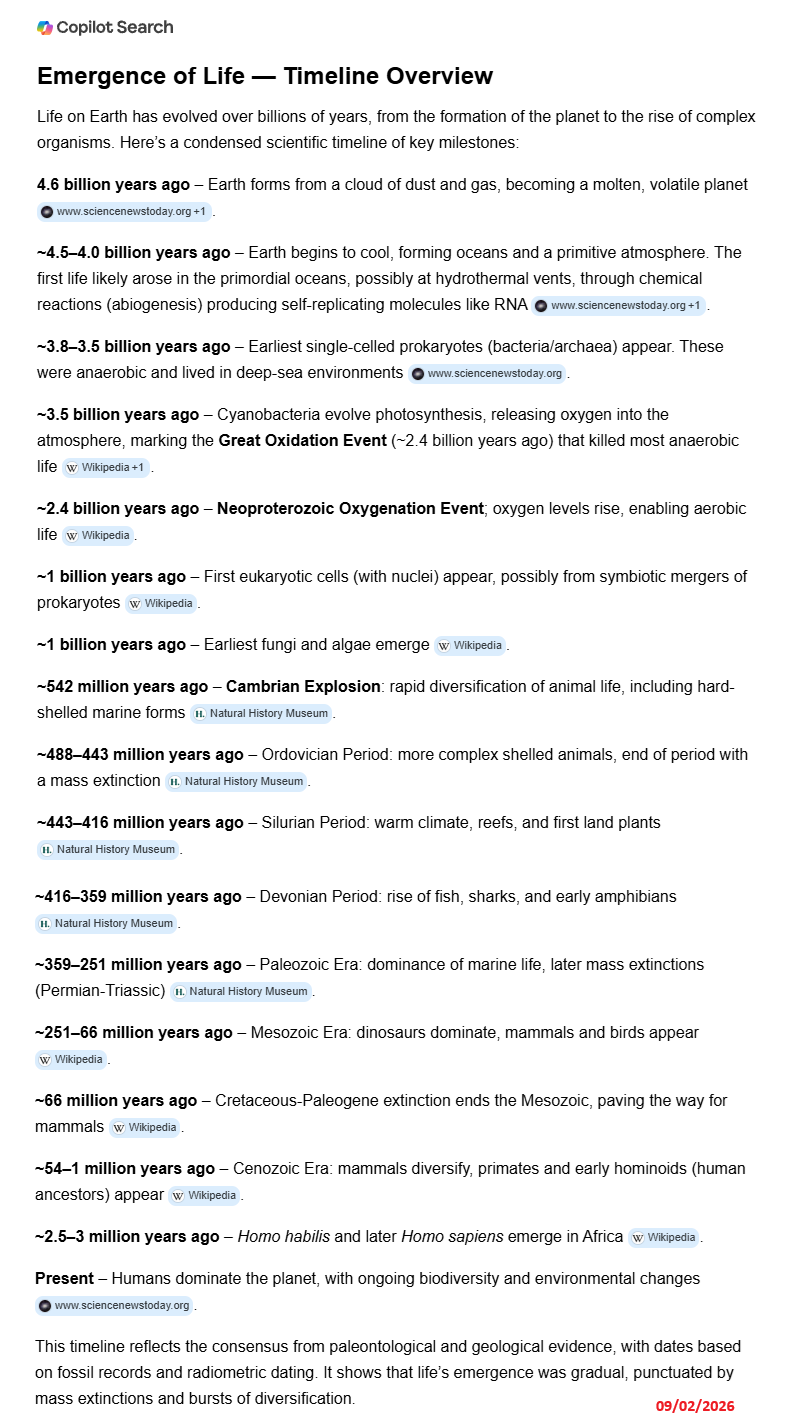
My speculation is that for every 1 billion years, the Earth rotation slowed about 6 hours. Hence:
- Today's rotation rate of 24 hrs (23 hrs, 56 min, 4.091 secs)
- 1 billion years ago: 18 hrs rate of rotation
- 1.5 billion years ago: 15 hrs rate of rotation
- 2 billion years ago: 12 hrs rate of rotation
- 2.5 billion years ago: 9 hrs rate of rotation
- 3 billion years ago: 6 hrs rate of rotation
- 3.5 billion years ago: 3 hrs rate of rotation
- 4 - 4.5 billion years ago: A very fast swirling/churning rate of dust and debris
Let us also include that the observation of the Sun due the Earth's rotation, produces a triangular pattern using time elapsed photography. The triangular figures are sometimes referred to as solargraphs. And from time to time I have seen the rising or setting sun exhibited in commercials or movies. As for a more explicit representation, I offer the following:
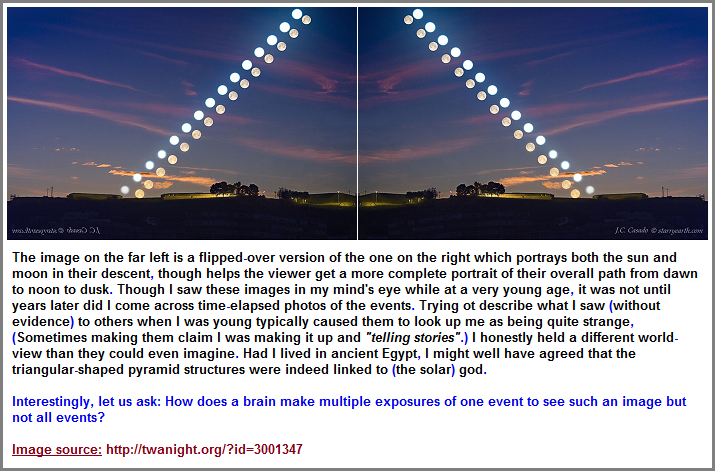
Let us further note that the Moon is receding (moving further away and will cause changes to tidal behavior), and the Sun is said to one day to expand to the point of engulfing the innermost three planets; whereby the three solar phases (as seen from Earth) are on a path of fusion... attesting to a 3 in 1 pattern.
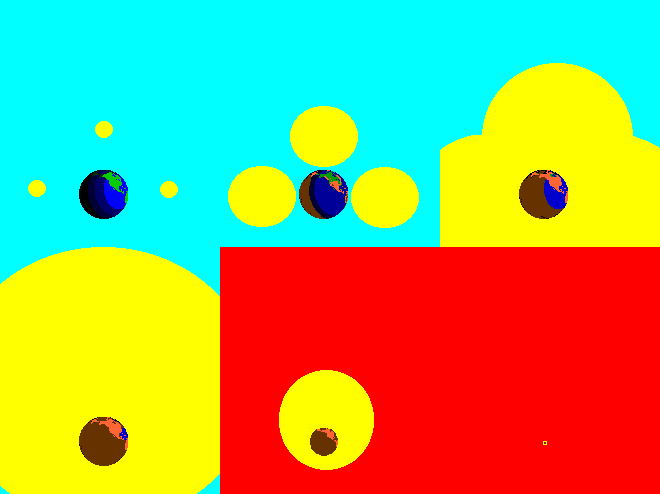
In addition, let us add the idea that due to changes in the rotation rate of the Earth, one must wonder if there is not some "rotation rate specificity" to different life forms including humans; whereby there is a limitation as to rotation rate in which humanity is enabled to survive. Survivability may have a rotation rate specificity for all the biological rhythms.
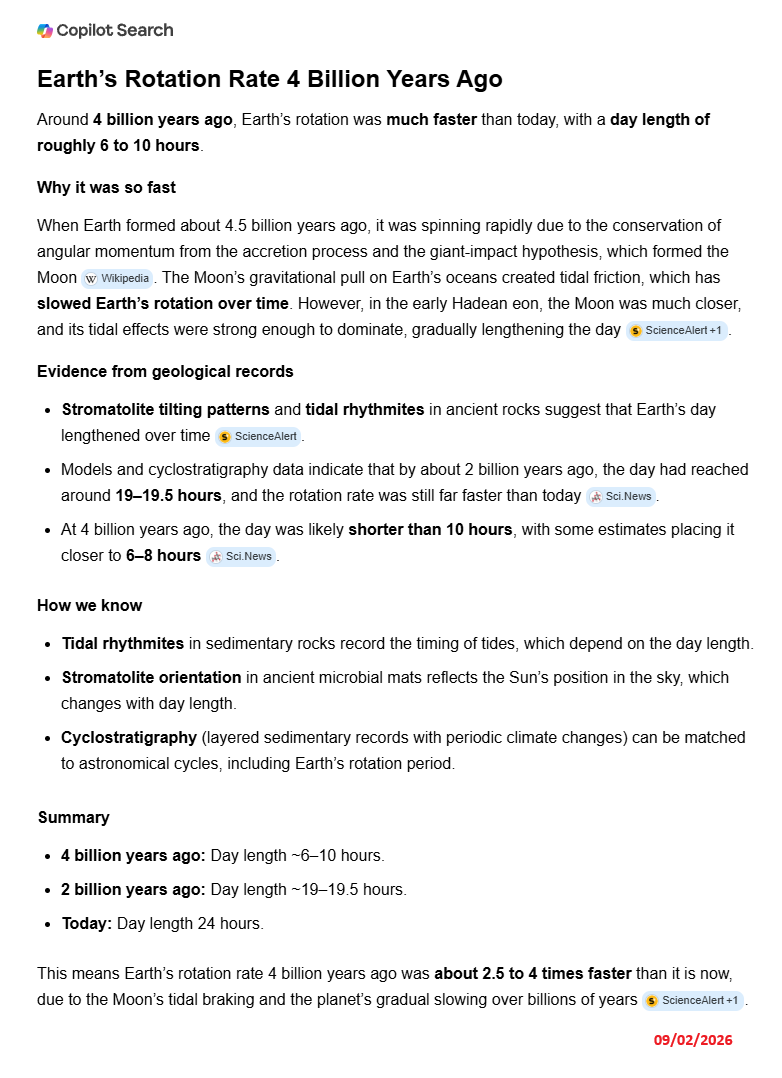
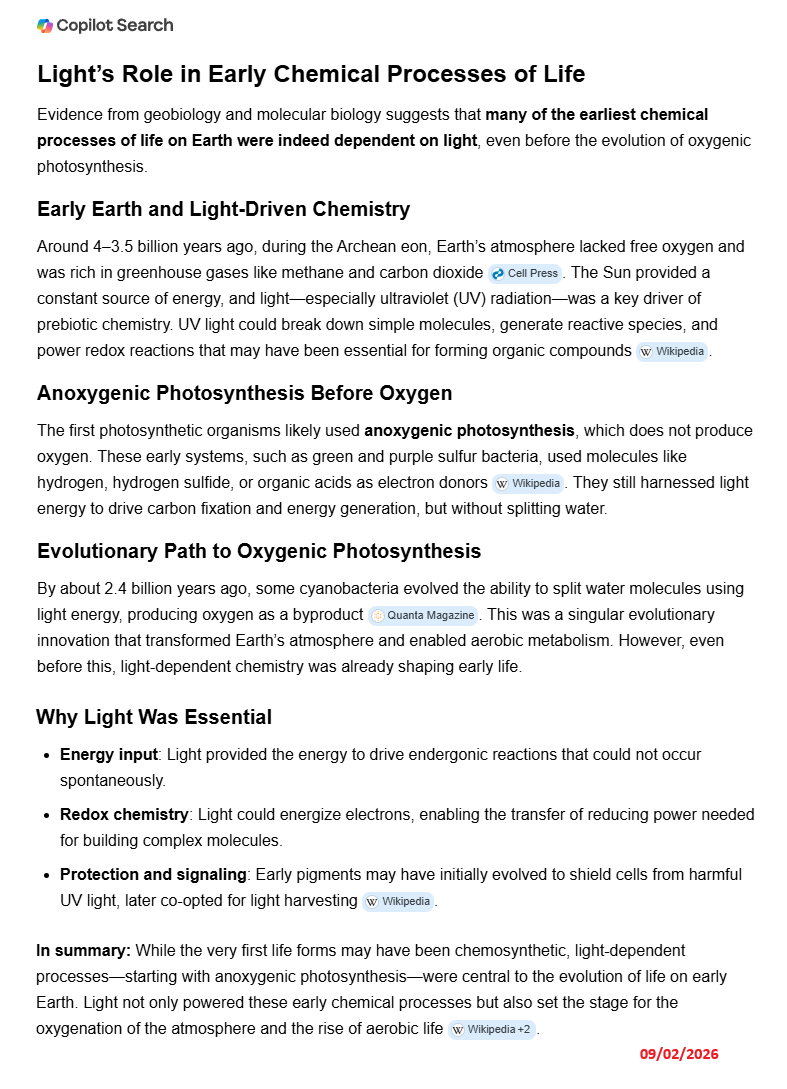
Granted that earliest pre-life microbial processes were created by chemosynthesis which had a primitive (non-triplet) code as a precursor to a triplet code, the path to what we call life with a triplet code was (in my guesstimation) undoubtedly due to photosynthesis. Let us look as some relevant commentary:
Origination:Wednesday, September 2nd, 5:05 AM
Date of initial posting:Wednesday, September 2nd, 12:05 PM
Updated posting:Tuesday, October 6th, 11:48 AM